US Launches New Wave of Strikes on Iran Amid Strait of Hormuz Standoff
The United States military launched a new wave of airstrikes against Iran overnight Sunday into Monday, targeting air defense systems, missile capabilities, and small boats near the Strait of Hormuz. The strikes followed an Iranian attack on a commercial vessel in the strait and Iran's declaration that the waterway was closed, deepening a standoff that has threatened global shipping and frayed an interim US-Iran truce agreement.
Bias ratings sourced from AllSides, MBFC. Ratings are cited, not the product's own verdict.
The report
The United States military launched a new wave of airstrikes against Iran beginning at approximately 2100 GMT on Sunday, extending overnight into Monday. The strikes targeted dozens of Iranian military sites including air-defense systems, coastal radar installations, missile and drone capabilities, and small boats, according to US Central Command. CENTCOM stated the strikes were intended to degrade Iran's ability to attack international shipping and civilian mariners transiting the Strait of Hormuz.
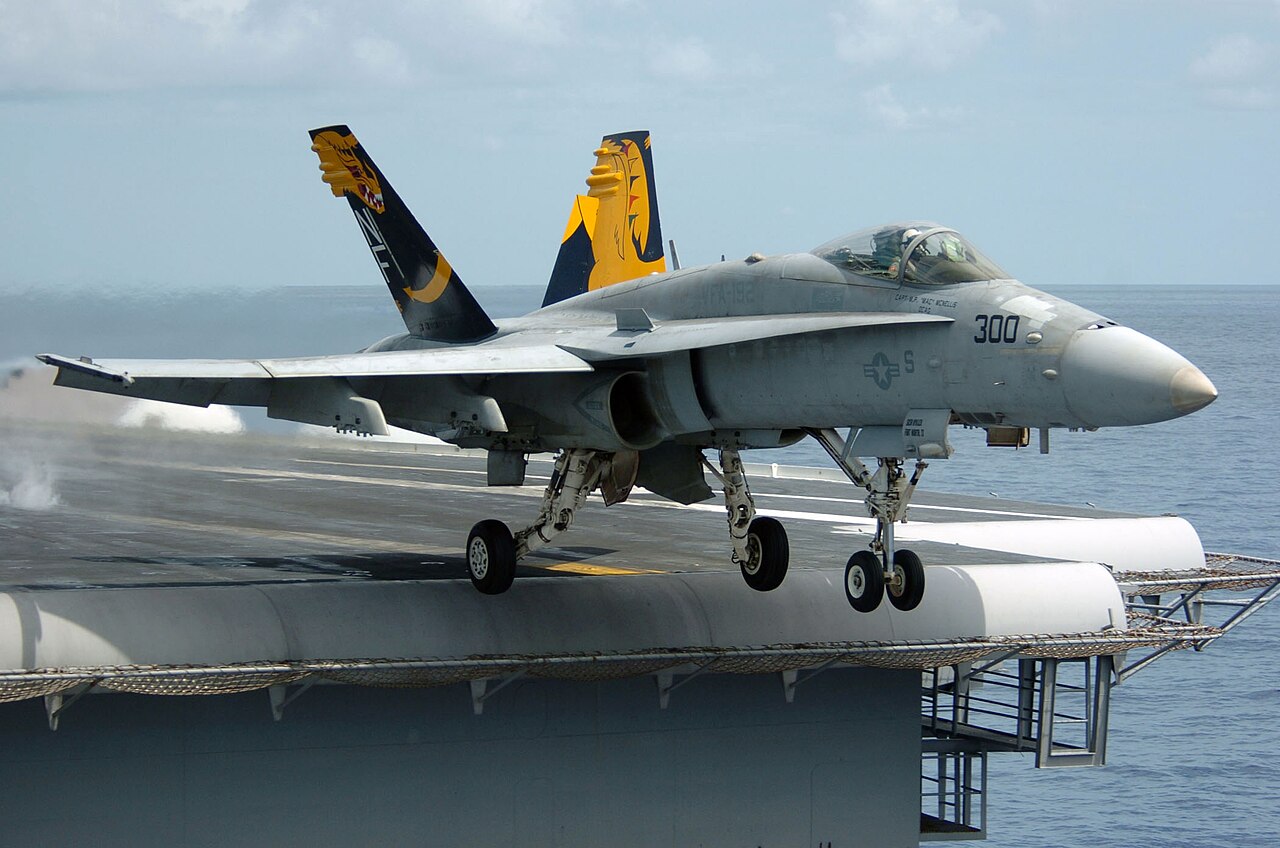
The strikes followed an Iranian attack on a commercial container ship in the Strait of Hormuz over the weekend that set the vessel ablaze and forced its crew to abandon ship, with at least one crew member reported missing. Iranian state media reported the US strikes hit multiple locations inside Iran, including Qeshm Island, Bandar Abbas, Khuzestan province near the Iraq border, and Farur island, with explosions also heard in Hajiabad north of Bandar Abbas.
An interim US-Iran truce agreement was signed last month, establishing a 60-day period for negotiations toward a permanent end to the conflict. The two sides are now near the midpoint of that period. Iran's foreign ministry stated that the latest US attacks had 'rendered futile' all diplomatic efforts of the past few months and blamed the United States for causing 'the return of insecurity in the Strait of Hormuz and disruption of international commercial shipping.'
Iran's Revolutionary Guard Corps launched retaliatory strikes on multiple regional countries, reportedly including Jordan, Bahrain, Kuwait, Oman, and Qatar. The United Arab Emirates said its air defenses engaged Iranian missiles and drones on Sunday. Kuwait reported that three northern land border posts were damaged in an attack on Sunday, and an offshore drilling platform was targeted by a hostile drone, injuring one person.
Missile alert sirens sounded at dawn Monday in Bahrain, home to the US Navy's 5th Fleet. Bahrain's interior ministry instructed residents to take shelter following the attacks. Iranian sources reported casualties inside Iran from the US strikes: at least one person killed and four wounded at a water pumping station in Mahshahr, one telecommunications worker killed and two wounded on Farur island, and a navy officer reported killed by semiofficial Iranian news agencies.
President Trump directed the new strikes against Iran and used forceful language to describe them, saying the military had 'hit them hard' and 'bombed the hell out of them.' The United States has conducted at least three rounds of airstrikes against Iran during the past week, with CENTCOM reporting more than 300 Iranian military targets struck over three nights, including approximately 140 strikes on Saturday night alone.
Iran's Revolutionary Guard Corps declared the Strait of Hormuz closed until further notice and until the end of American interventions in the region. Iran's Persian Gulf Strait Authority said passage was not currently possible due to what it called illegal US military movements. Iran has sought to establish a permanent system for collecting fees from vessels transiting the strait and has warned vessels not to sail without its authorization.
Iran's Revolutionary Guard characterized the Strait of Hormuz as closed. The United States government and CENTCOM asserted it remained open, with CENTCOM stating 'Iran does not control the strait' and that traffic was flowing. President Trump also maintained the strait was open.
President Trump claimed Iran had agreed to a diplomatic deal on Saturday but then, within an hour, launched a drone attack on a ship. Iran's chief negotiator Mohammad Bagher Ghalibaf countered that 'The era of one-sided deals is OVER,' rejecting Trump's characterization of the diplomatic engagement.
The Times of Israel reported that a multinational body overseen by the US Navy stated shipping traffic through the strait was continuing at 'reduced levels,' with CENTCOM saying more than 140 ships had transited in the past week, compared to a pre-war daily baseline of approximately 140 vessels.
The Guardian reported that talks between Iran and Oman in Muscat on Saturday focused on managing the strait and transit routes but failed to reach a result. Iran attributed the failure to US pressure on Oman.
The Times of Israel reported that Pakistan has been mediating between the United States and Iran. Pakistan's Foreign Minister Ishaq Dar called for 'deescalation' in a phone call with Iran's foreign minister on Sunday.
The Times of Israel reported that UN Secretary-General António Guterres warned that 'a return to full-scale hostilities would have catastrophic consequences.'
The Times of Israel reported that Israel remained on the sidelines of the US-Iran fighting as of early Monday morning, neither joining the US strikes nor becoming a target of Iran's retaliatory strikes.
The Guardian reported that the conflict has caused global economic shock waves, driving energy prices higher and fueling global inflation. Oil prices rose more than 3.5% when futures trading opened Monday in Tokyo, with West Texas Intermediate jumping above $74 a barrel, after having tumbled following the interim agreement announcement.
What the coverage shows
The 7 outlets behind this story
Bias ratings sourced from AllSides and Media Bias/Fact Check. Ownership shown where disclosed.